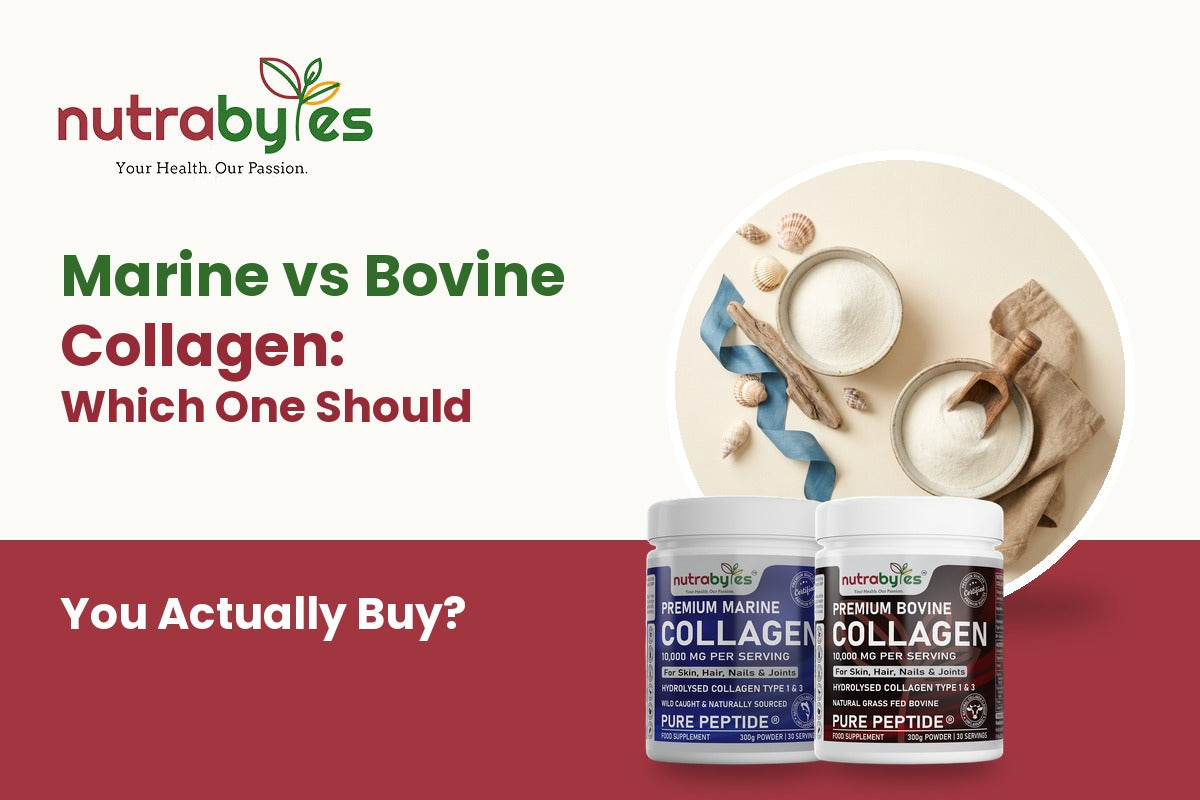











Here's the uncomfortable truth most collagen brands won't put at the top of the page: if you take collagen for two weeks, notice nothing, and quit, you were always going to notice nothing. Not because collagen doesn't work, but because skin doesn't work that fast.
Your skin's outer layer takes roughly four to six weeks to renew itself, and that slows as you get older. Hair grows about a centimetre a month. Nails take up to six months to fully replace themselves. Any supplement working through those systems is bound by those clocks. The clinical trials that found benefits ran for 8 to 12 weeks, and that's not an accident.
So here's a realistic timeline, based on what the studies measured and when, plus the parts of the collagen experience that research doesn't capture well. No "glow up in days" promises. You'd be right not to believe them.
Weeks 1 to 2: nothing visible, and that's normal
In the first fortnight, collagen peptides are being absorbed and circulating, and that's about it. Studies on hydrolysed collagen show peptides appear in the bloodstream within hours of a dose, so the delivery system works quickly. The construction project doesn't.
A few people report earlier changes: better skin hydration, or what one long-term user on Reddit memorably called "quieter joints". Early hydration changes are plausible, since some trials picked up skin moisture improvements at week 4, which means the change had begun before that. But if week 2 arrives and your mirror looks identical, nothing has gone wrong. This is the stage where most people give up, and it's the single most avoidable mistake in the entire category.
What you should focus on instead: building the habit. Same time, every day. Coffee, smoothie, or straight from the bottle if you're using our liquid marine collagen. The people with good 12-week stories are simply the people who were still taking it at week 12.
Weeks 3 to 4: nails first, usually
Nails are often the first visible evidence, for a mundane reason: you can see new nail growth within weeks, whereas new collagen in your dermis is hidden under existing skin. A frequently cited 24-week study on brittle nails found faster growth and fewer breakages with 2.5g of collagen peptides daily. In our own customer messages, "my nails are stronger" is reliably the first unprompted comment, and it tends to arrive around the one-month mark.
Skin hydration studies begin registering measurable differences around week 4 too. Measurable is doing some work in that sentence: instruments can detect it before your eyes can. If your skin feels slightly less tight or flaky, that's consistent with the data. If it doesn't yet, still normal.
Weeks 5 to 8: the window where skin changes show
This is where the bulk of the published evidence sits. Trials using 2.5g to 10g of collagen peptides daily found improvements in skin elasticity and hydration at week 8, with several also reporting reduced wrinkle depth. A 2021 meta-analysis pooling 19 studies concluded hydrolysed collagen improved skin hydration and elasticity versus placebo, with the caveat that many trials were industry funded. That caveat is worth knowing about, and it's also why we point at the independent reviews rather than a single flattering study.
What this looks like in a mirror rather than a lab: skin that sits a bit better, makeup behaving differently, the sort of change where a friend says you look well rested rather than asks what you've done. If you took a week 1 photo (do this, seriously), week 8 is when comparing becomes interesting.
Joint-focused users tend to notice things in this window as well. Studies in athletes with activity-related knee discomfort used around 5g to 10g daily and reported reduced discomfort at 12 weeks, with trends appearing earlier. "My knees are less noisy on stairs" is the anecdotal version.
Weeks 9 to 12: the fair verdict point
Twelve weeks is when you're entitled to judge. It's the standard endpoint in skin trials and the point where elasticity improvements were most consistent. Hair sits on an even slower clock: since hair grows around a centimetre a month, any contribution collagen makes to hair (the follicle-relevant amino acids, plus biotin in our liquid formulas) needs three to six months before there's enough new growth to assess. Anyone promising hair results in a month is selling to you, not informing you.
If you've hit 12 weeks of genuinely daily use at a proper dose and see no difference in skin, nails or joints, then a reasonable person can conclude collagen isn't doing much for them, and we'd rather say that plainly than keep you buying. Some trials had non-responders. Bodies vary. What we'd check first, though, is the two variables below, because they account for most disappointments.
The two reasons collagen "doesn't work"
The first is dose. The positive studies used 2.5g to 10g a day. A surprising number of products, especially capsules, contain a few hundred milligrams. If you bought one of those, you weren't running the experiment the studies ran. Every Nutrabytes collagen, marine powder, bovine powder or the liquids, delivers 10,000mg per serving, the top of the studied range, so this failure mode is off the table.
The second is consistency, and it's really a product-format question in disguise. Powders fail when mixing them is annoying. Liquids fail when the taste is bad. Reddit is full of people who "kept forgetting" a product they mildly dreaded taking. Pick the format you'll actually enjoy at 7am on a wet Tuesday in November. That is not a small consideration. It might be the whole game.
How to run a fair 12-week trial
Take a bare-faced photo in the same light before you start, and note anything specific you want to change: nail splitting, dry cheeks, creaky knees on stairs. Take 10g daily, any time of day that fits your routine (timing matters far less than people think, though we've covered the morning-vs-night question separately). Vitamin C contributes to normal collagen formation, which is why it's built into our liquid formulas. Then check your photo at weeks 8 and 12, not week 2.
And if you're weighing up marine against bovine before you start, our comparison guide covers that decision honestly.
Quick answers
Can collagen work in a week? Visible changes in a week aren't realistic. Skin renewal takes four to six weeks, so week one changes are usually hydration or placebo.
What results come first? Usually nails and skin hydration around weeks 3 to 4, skin elasticity by weeks 6 to 8, joints by 8 to 12, hair last at 3 to 6 months.
Does taking more speed it up? No. 10g daily covers the studied range; doubling it mostly makes expensive urine. Time, not dose, is the limiting factor beyond that point.
What happens if I stop? Your body doesn't lose what it built overnight, but studies suggest measured improvements fade over a few months once supplementation stops.
Do I need to take it forever? If it's working for you, the benefits are tied to ongoing use, like most nutrition. A 12-week trial first tells you whether it's worth it.
Food supplements should not replace a varied, balanced diet. If you are pregnant, breastfeeding or taking medication, check with your GP before starting any new supplement.