










Every autumn the same conversation happens across the UK. Someone mentions they're exhausted and aching, someone else says "have you checked your vitamin D?", and then everyone discovers that nobody actually knows how much to take. The NHS says one number. The bottle in Boots says another. That confident person on Reddit takes ten times both.
Let's sort it out properly, because the underlying facts are less confusing than the numbers make them look.
Why this is a UK problem specifically
Your skin makes vitamin D from UVB sunlight. Between about October and early March, the sun over the UK never gets high enough in the sky for meaningful UVB to reach you, no matter how bright the day looks. A crisp sunny January walk in Yorkshire produces essentially no vitamin D. This isn't a wellness-industry talking point; it's the reason the NHS advises that everyone in the UK should consider a supplement during autumn and winter.
Diet doesn't rescue you either. Oily fish, eggs and fortified foods help, but typical UK diets provide only a small fraction of even the conservative target. So from October to March, supplements are how most British bodies get vitamin D. The only real question is dose.
First, decode the units
Half the confusion is just units. Vitamin D is labelled in micrograms (µg or mcg) or international units (IU), and the conversion is simple: 1µg equals 40 IU.
So the NHS recommendation of 10µg is 400 IU. A "1000 IU" supplement is 25µg. A "4000 IU" one is 100µg. Same substance, three ways of writing it. Keep the 40x conversion in your head and every label in the pharmacy suddenly makes sense.
The NHS number, and why the internet argues with it
The official UK advice is 10µg (400 IU) a day for everyone over four, especially October to March. The safe upper limit for adults is set at 100µg (4,000 IU) a day.
Why does online opinion so often sit above the NHS figure? Because the two camps are answering different questions. The NHS number is a population-level figure designed to prevent deficiency diseases like rickets, essentially the amount that keeps almost everyone's bones out of trouble. The higher doses you see discussed, commonly 1,000 to 2,000 IU (25 to 50µg), reflect research on getting blood levels into ranges associated with broader benefits, and the practical reality that some people absorb or make less than others.
Both positions are defensible. What's not really defensible is the third camp: megadosing 10,000 IU daily indefinitely without a blood test. Vitamin D is fat soluble, your body stores it, and genuinely excessive long-term intake can raise blood calcium to harmful levels. More is not better past a point; it's just more.
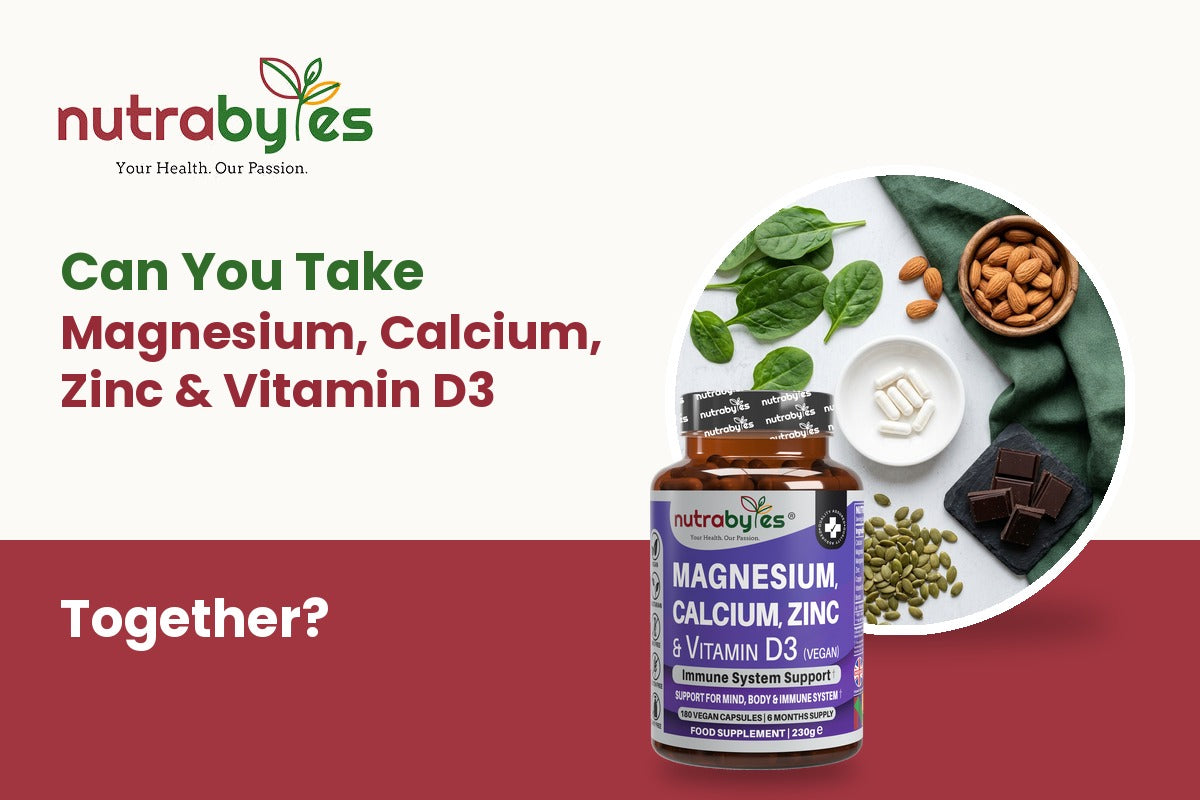
A sensible reading for most healthy UK adults: 10µg is the floor, up to 100µg is the ceiling, and the popular middle ground of 25 to 50µg (1,000 to 2,000 IU) through winter sits comfortably inside the safety margin. Our vegan D3 complex sits in that territory alongside magnesium, calcium and zinc.
Some people should assume they need more attention rather than less: darker skin makes less vitamin D from the same sunlight, covering skin for cultural or religious reasons reduces production, and older skin is less efficient at it. Being housebound, working nights, or carrying more body fat all push the same direction. If several of those describe you, a £30 NHS or private blood test in late autumn answers the question properly instead of by guesswork. Deficiency treatment (the short courses of very high "loading doses" GPs sometimes prescribe) is a medical matter; if a test finds you genuinely deficient, follow your GP's protocol rather than DIY-ing it.
D3 or D2, and the vegan wrinkle
Two supplement forms exist. D3 (cholecalciferol) is the form your skin makes; D2 (ergocalciferol) is the plant-derived one. Head-to-head studies consistently show D3 raises and maintains blood levels more effectively, so D3 is the better default.
Traditionally D3 came from lanolin (sheep's wool), which is fine for vegetarians but not vegans. The good news is that vegan D3 from lichen now exists and works identically. It's what we use, so vegans don't have to settle for D2. If the label just says "vitamin D3" with no source, vegans should ask; if it says D2, there's a better option.
Getting more from the same capsule
Three small adjustments improve how vitamin D works for you.
Take it with food containing some fat. It's fat soluble, and absorption improves noticeably alongside a meal versus an empty stomach. Breakfast with eggs, or dinner, beats a capsule with black coffee.
Mind your magnesium. The enzymes that convert vitamin D into its active form depend on magnesium, and UK diets are frequently light on it. This pairing is the main reason our winter formula combines D3 with magnesium, calcium and zinc in one capsule rather than selling you four bottles: the zinc supports normal immune function alongside the D3, and the evening dose of magnesium suits the wind-down end of the day nicely.
Be consistent rather than heroic. Vitamin D has a long half-life, so daily-ish consistency across the whole winter matters far more than perfection on any given day. Start at the beginning of October, when there's still something in the tank from summer, rather than waiting until you're flattened in January.
What low vitamin D actually feels like, and honest limits
The classic pattern people describe is nonspecific: tiredness that sleep doesn't fix, low mood as the days shorten, aches, more colds than usual. Vitamin D deficiency can contribute to all of those. So can iron deficiency, thyroid problems, poor sleep and plain old winter. This is why we'd rather point you to a blood test than promise a supplement will transform your energy. If your levels are low, correcting them tends to help how you feel over weeks. If your levels were fine, extra vitamin D mostly does nothing noticeable, because it isn't a stimulant. Anyone who tells you otherwise is selling harder than the evidence allows.
Where the evidence is solid and unglamorous: vitamin D contributes to the normal function of the immune system, normal muscle function, and the maintenance of normal bones and teeth. Through a British winter, that's exactly the infrastructure you want maintained.
The routine, in one paragraph
From October to March: a daily D3 supplement between 10µg and 50µg with a meal, vegan lichen-derived D3 if that matters to you, magnesium somewhere in your day, and a blood test if you're in a higher-risk group or you're flattened every winter. Stop guessing, start in October, and let the routine be boring. Boring is what working looks like in this category.
Quick answers
How much vitamin D should I take in the UK? NHS advice is 10µg (400 IU) daily minimum through winter; up to 100µg (4,000 IU) is the adult safe upper limit. Most winter supplements sit between 25 and 50µg.
Do I need it in summer? Most people make enough from April to September through everyday sun exposure, though higher-risk groups are advised to supplement year round.
Is 1000 IU the same as 25µg? 1000 IU is 25µg. Divide IU by 40 to get micrograms.
D3 or D2? D3. It raises blood levels more effectively. Vegans should look for lichen-derived D3.
Can I take vitamin D with magnesium, calcium and zinc? Yes, they work well as a group, and magnesium is needed to activate vitamin D. We combine all four for that reason.
Food supplements should not replace a varied, balanced diet. If you suspect deficiency or take medication, speak to your GP, who can arrange a blood test.